Crazy Time Statistics: How the Mechanics Work, Why Trackers Matter, and Whether Results Can Be Predicted
- Casinos with CrazyTime
 1win
1winUp to 500% bonus on your first deposit
 Pin-Up
Bonus up to $5,300 for deposit
 1xBet
1xBetSign-up bonus up to $400
 Pari Match
$50 bonus for your first deposit of $10
Crazy Time, one of the most popular live shows from Evolution Gaming, is based on spinning a giant wheel of fortune combined with four unique bonus rounds.
The game attracts players with its spectacular presentation, large multipliers, live hosts, and complete unpredictability.
With such popularity, many players naturally ask: is it possible to analyze Crazy Time statistics and use them for predictions?
Others wonder the opposite — are the results fair, and can the stream be trusted?
Gameplay and Mechanics of Crazy Time
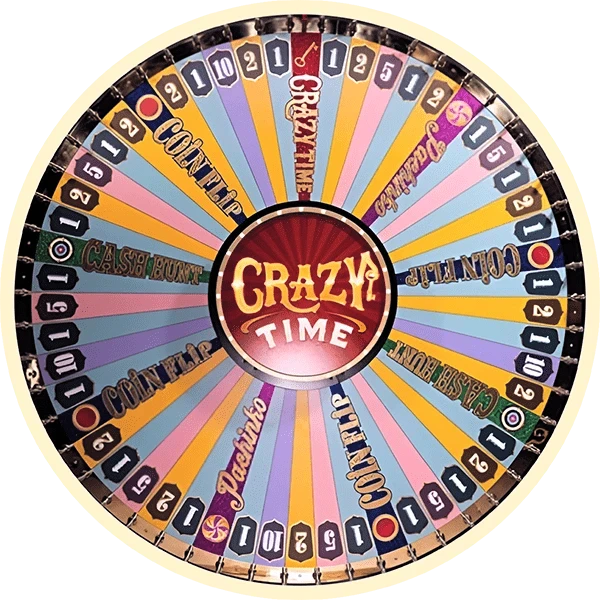
At the core of the game is a giant wheel divided into 54 segments:
- numbers: 1, 2, 5, 10
- bonus rounds: Coin Flip, Cash Hunt, Pachinko, Crazy Time
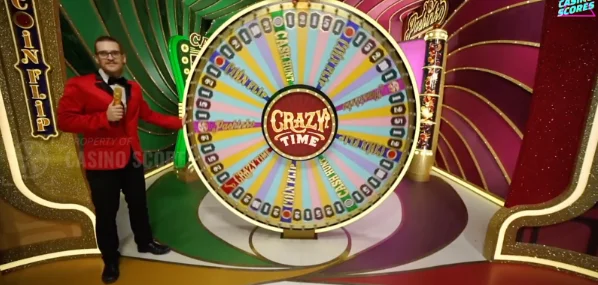
The host spins the wheel manually, and the result is determined by TCS John Huxley hardware — classic, certified live-casino equipment that operates independently of any RNG.
The random number generator is used only for the Top Slot, which selects an additional multiplier before each spin.
Every round is independent, and probabilities do not change over time.
Why Players Started Analyzing Crazy Time Statistics
The developer shows only the last 21 results, which many players find insufficient. Due to high volatility, players often observe long streaks without bonuses — sometimes dozens of spins — which creates the illusion that the game is “building up” to something.
“If a bonus hasn’t appeared for a long time, it means it should appear soon.”
Because of this, more and more players follow online statistics on websites, Telegram channels, and tracker platforms.
However, it’s important to understand: history shows dynamics, but it cannot predict the next spin.
Advantages of Crazy Time Statistics
Statistics themselves do NOT increase the player’s chance of winning, but they provide useful supplemental information:
1. Understanding hit frequency
Players can see how long it has been since a particular bonus (such as Cash Hunt) or a specific multiplier appeared.
2. Volatility analysis
Statistics help visualize how often “dry streaks” occur and how long the gaps between bonuses typically are.
3. Evaluating real-world data
Comparing actual results with theoretical probabilities helps confirm that the mechanics are fair.
4. Bankroll planning
Statistics allow players to estimate how many rounds may pass without meaningful payouts and adjust their bankroll accordingly.
But it’s crucial to remember: there are no signals in statistics that indicate “the next spin will bring a bonus.”
Crazy Time Hit Probabilities
| Segment | Number of Slots | Probability | Payout |
|---|---|---|---|
| 1 | 21 | 38.89% | 1 : 1 |
| 2 | 13 | 24.07% | 2 : 1 |
| 5 | 7 | 12.96% | 5 : 1 |
| 10 | 4 | 7.41% | 10 : 1 |
| Coin Flip | 4 | 7.41% | Bonus |
| Cash Hunt | 2 | 3.70% | Bonus |
| Pachinko | 2 | 3.70% | Bonus |
| Crazy Time | 1 | 1.85% | Bonus |
This means that bonuses appear on average once every 6 spins, but this is only theoretical probability. In practice, streaks can be much longer — and this is completely normal for a random mechanical system.

How the Top Slot Works and Why It Matters
Before each spin, the Top Slot selects:
- a segment;
- a multiplier from ×2 to ×50.
If the selected segment matches the result of the wheel, the player receives an enhanced payout. On bonus rounds, the Top Slot can multiply winnings dozens of times, making the game unpredictable and explosive in terms of potential payouts.
Crazy Time Statistics Trackers: Benefits and Misconceptions
There are dozens of websites, Telegram bots, and specialized trackers that display:
- the history of the last 50–500 spins,
- the time of the last bonus,
- the hit frequency of each segment,
- the highest multipliers of the day,
- the length of bonus streaks,
- acceptable theoretical deviations.
What is the real benefit of trackers?
- they help understand volatility;
- they allow proper bankroll planning;
- they let players “test” strategies without playing — analyzing tactics on historical data.
Where do trackers mislead players?
- they create a false belief that a bonus “must happen soon”;
- they encourage raising bets in anticipation of a bonus;
- they create the illusion of predictability.
These mistakes lead to losses because every spin is independent.
Conclusion
Crazy Time statistics are a useful tool, but only as a means of analysis — not prediction. They help understand the nature of the game, evaluate volatility, test strategies, and manage bankrolls responsibly.
However, it's crucial to remember: every spin is completely independent. No tracker, chart, or history log can guarantee the appearance of a bonus or a multiplier.
Crazy Time remains a game of luck, bright emotions, and unexpected moments — and that’s exactly what makes it unique and popular worldwide.
Frequently Asked Questions About Crazy Time Statistics and Analysis
Can you predict the next result using Crazy Time statistics?
No. Statistics only show past spins and do not affect future outcomes. Every round is independent, and the probability of hitting bonuses always stays the same.
How useful are Crazy Time trackers for strategy?
Trackers help understand game dynamics, streak lengths, and volatility, but they do not provide predictions. They are useful for analysis and bankroll planning, but should not be used as bonus predictors.
Why do bonuses sometimes not appear for a long time?
Crazy Time is a high-volatility game. Although bonuses theoretically appear once every ~6 spins, in practice there may be streaks of 20–40 spins without bonuses. This is normal statistical variation.
Does it matter that a bonus “hasn’t appeared in a long time”?
No. This is a classic player error — the Gambler’s Fallacy. The wheel does not “remember” previous results, and the probability of a bonus always remains the same.
Can statistics be used to choose a strategy?
Yes, but only indirectly. Statistics help evaluate the nature of the game and test theories using historical data. However, a strategy should be based on bankroll management, risk tolerance, and probability — not on expectations of a specific outcome.